

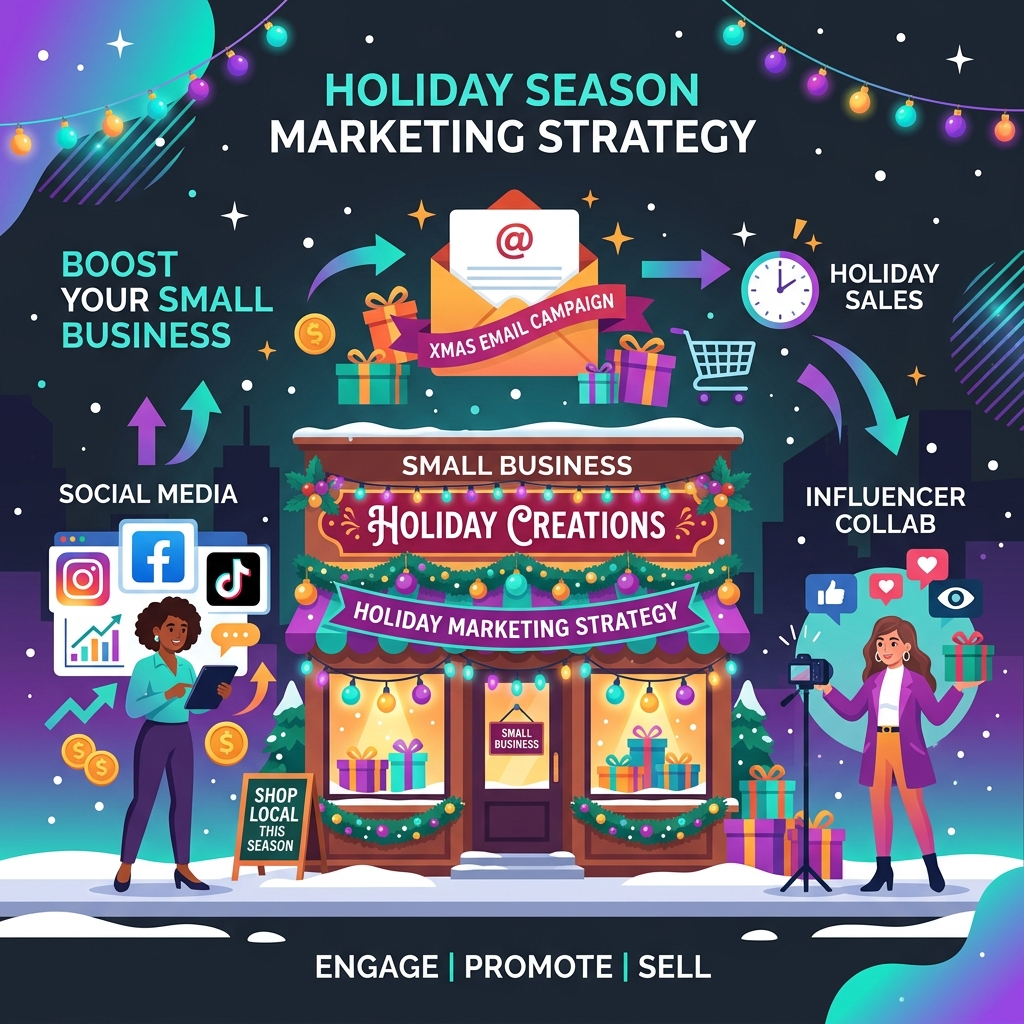
1. Know Your Target Audience — With Data, Not Guesses
The single most important holiday marketing step is understanding exactly who you’re selling to. In 2026, “knowing your audience” means using behavioral data, not just demographics. Review your CRM, website analytics, and past purchase history to identify your highest-value customer segments before you spend a single dollar.
Key questions to answer before launching any holiday campaign:
- Which products or services generated the most revenue last holiday season?
- What is the average time from first touch to purchase for holiday shoppers?
- Are your holiday buyers primarily mobile or desktop shoppers?
- What pain points or desires drive their holiday purchasing decisions?
2. Lead with Short-Form Video — It’s Non-Negotiable in 2026
If your holiday marketing strategy doesn’t have a short-form video component, you’re invisible to the largest and fastest-growing audience segment. TikTok, Instagram Reels, and YouTube Shorts now account for over 65% of holiday product discovery among 18–45 year-olds.
What works in short-form holiday video:
- Authentic unboxing: Real reactions from real customers outperform polished brand videos by 4x.
- Holiday tutorials: Show how your product solves a holiday-specific problem in under 45 seconds.
- Behind-the-scenes: Preparation, packaging, and team content builds emotional connection.
- Trending audio + seasonal hooks: Use trending holiday sounds but keep the first 2 seconds visually hooky — that’s your only shot to stop the scroll.
Post consistently — 3 to 5 times per week during peak season. Repurpose the same core video across TikTok, Reels, and Shorts with slight aspect ratio adjustments.
3. Use AI-Powered Personalization to Scale One-to-One Marketing
What used to take an enterprise team is now accessible to any small business. AI-driven personalization tools like Klaviyo AI, Mailchimp’s predictive segmentation, and Meta Advantage+ allow you to deliver tailored holiday messages at scale without needing a massive team.
Apply AI personalization at every touchpoint:
- Email: AI-generated subject lines and product recommendations based on individual browse and purchase history.
- Paid ads: Meta Advantage+ automatically serves different creative variants to different audience segments to find the best match.
- On-site: Dynamic product recommendations that change based on the visitor’s behavior — increasing average order value by 15–30%.
- SMS: Personalized name + relevant product + urgency = the highest-converting holiday message format.
4. Run a Targeted Influencer Marketing Campaign
Macro-influencer deals are expensive and often ineffective for small businesses. In 2026, the playbook has shifted decisively to micro-influencers (10K–100K followers) who deliver 6-8x higher engagement rates and far more authentic audience trust than celebrities.
How to structure an influencer holiday campaign:
- Identify 5–10 micro-influencers whose audience closely matches your customer profile.
- Offer product gifting + a small performance fee tied to tracked conversions (use discount codes).
- Allow creative freedom — influencer-native content always outperforms brand-scripted content.
- Repurpose influencer content as paid social ads (with permission) — this UGC-style paid content routinely reduces CPA by 20–40%.
5. Build a Channel-Specific Holiday Strategy
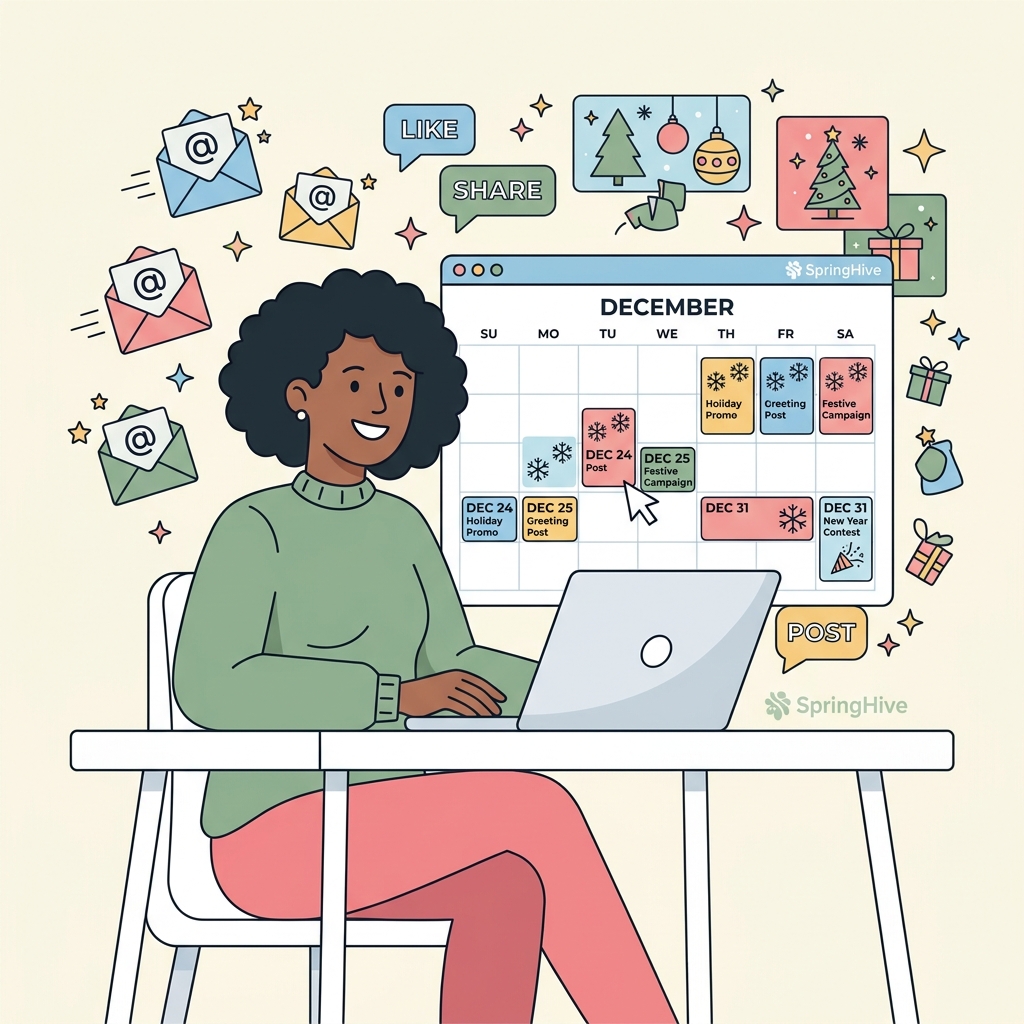
A single message blasted across every platform rarely works. Each channel has its own culture, content format, and audience expectation. Map your holiday strategy to each channel’s strengths:
- Facebook/Meta: Retargeting warm audiences, cart abandonment campaigns, and lead generation forms.
- Instagram: Visual product storytelling, Reels discovery, and shoppable posts.
- TikTok: Top-of-funnel awareness and organic discovery through trending content.
- Google: Capturing high-intent search traffic with Shopping ads and branded keywords.
- Pinterest: Holiday gift guides, DIY content, and visual search — especially powerful for home, fashion, and food brands.
Use social media marketing services to ensure each channel’s content is optimized for its specific algorithm and audience behavior.
6. Maximize Email & SMS Marketing Sequences
Email is not dead — it’s the highest-ROI digital marketing channel with an average $42 return for every $1 spent. The secret in 2026 is behavioral triggers, not batch blasts.
Build these essential holiday sequences:
- Pre-holiday teaser (8–10 weeks out): Build anticipation with early access offers for subscribers.
- Black Friday / Cyber Monday sequence: 4–6 emails over the 5-day window with escalating urgency.
- Cart abandonment: 3-email sequence triggered 1 hour, 24 hours, and 72 hours after abandonment.
- Post-purchase upsell: Complementary product recommendations within 48 hours of purchase.
- Last-chance shipping: “Order by [date] to receive before the holidays” — one of the highest-converting triggers of the season.
Pair email with SMS for abandoned cart recovery — text reminders sent 2–4 hours after the cart abandonment email generate a 35–45% lift in recovered revenue.
7. Launch a Customer Appreciation Campaign
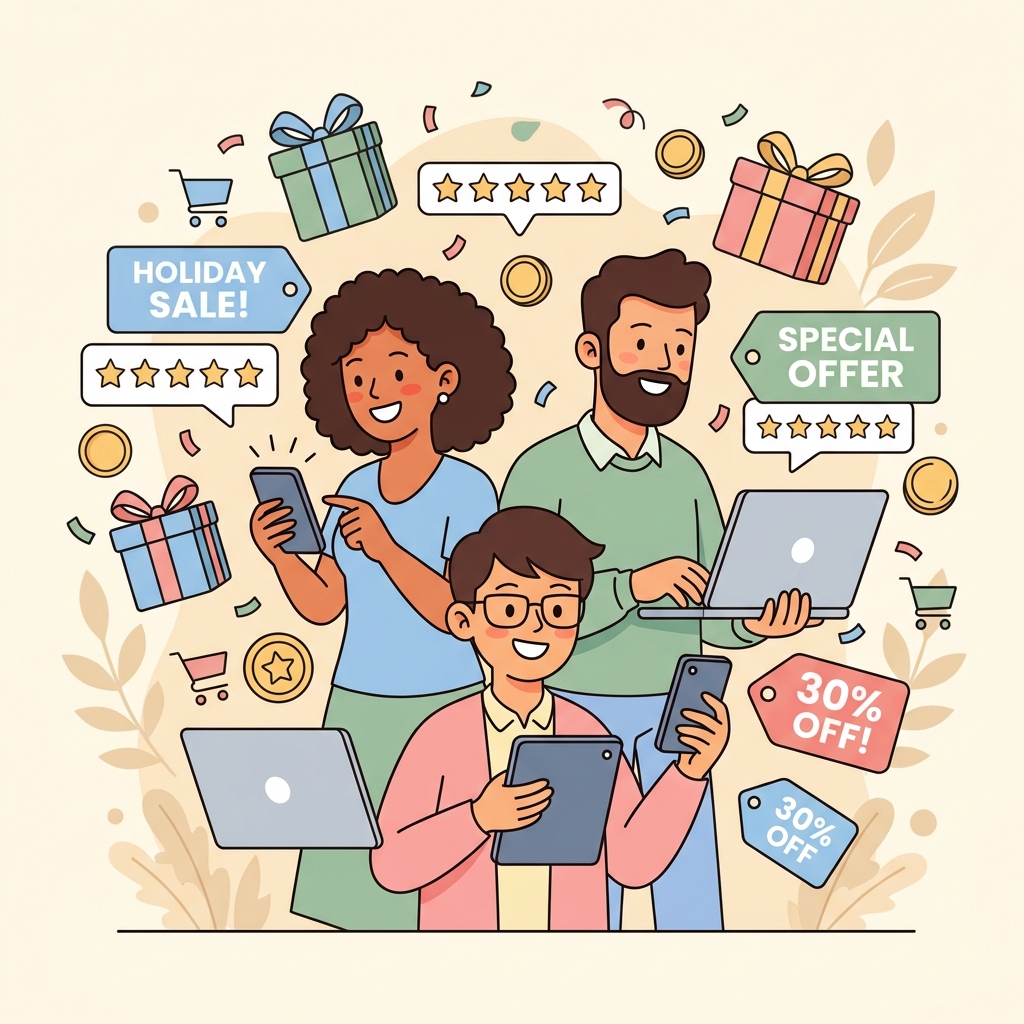
The holidays are the single best time to deepen relationships with existing customers — and existing customers are 5x cheaper to convert than new ones. A well-executed customer appreciation campaign drives repeat purchases, increases lifetime value, and generates powerful word-of-mouth referrals.
Ideas that work:
- Exclusive early-access holiday sale for loyalty members only (48 hours before public launch).
- Personalized holiday gifts or cards for your top 10% of customers.
- Double loyalty points during the holiday season.
- A “thank you” video message from the founder — surprisingly high open rates when sent by email or SMS.
8. Leverage Social Commerce to Reduce Purchase Friction
In 2026, consumers increasingly expect to discover and purchase without leaving their social app. TikTok Shop, Instagram Shopping, and Facebook Shops allow you to create a seamless path from scroll to sale.
If your products are shoppable, set up native storefronts on every relevant platform and ensure your product catalog is synced and up to date before the holiday season begins. Even a 1–2 click reduction in the purchase path can significantly improve conversion rates during high-intent holiday shopping periods.
SpringHive builds performance-driven holiday campaigns for businesses in Cebu and Sacramento. From social media management to email automation and paid ads — we handle the full funnel so you can focus on fulfilling orders. Contact us for a free strategy session.
Good to Know — Holiday Marketing FAQ